HAIR TRANSPLANT
ABOUT
Hair Transplant
Hair transplants, also called hair restoration or hair grafting, is a procedure that involves taking donor hairs from one or more areas of your body (most commonly the back or sides of the scalp or even from the beard, back or chest area) and transferring it to areas of hair loss where they can continue to go.
Hair transplant used to be commonly done to add more hair to an area on the head that may be thinning or balding. However, now we are doing eyebrow and beard hair transplants as well
When the hair is properly transplanted, it continues to grow for the rest of your life. The hair that is transferred is your own tissue, so it is natural and your body will not reject it. Hair transplants will look natural when they are done well.
PROCEDURES
What is the Procedure
Preparation & Sedation
The procedure is performed in a licensed medical facility.
Patients are kept comfortable under sedation administered by a qualified anaesthetist.
Donor Hair Harvesting
Hair follicles are obtained from the donor area using one of two methods:
- FUT (Follicular Unit Transplantation) – a strip of scalp is removed and grafts are prepared under magnification.
- FUE (Follicular Unit Extraction) – individual follicles are extracted directly from the donor site.
Recipient Site Preparation
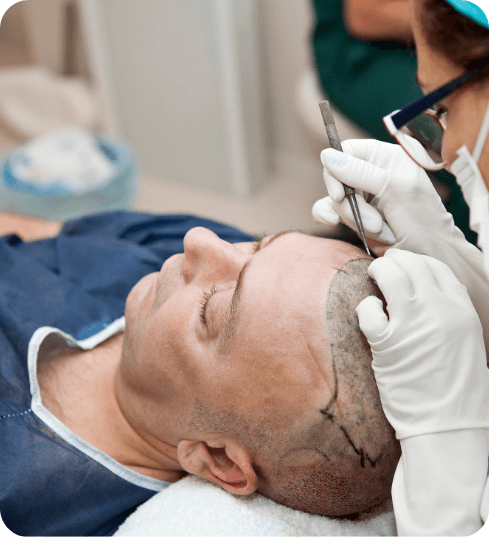
Tiny micro-incisions are created in the thinning or balding area to prepare for implantation.
The direction and spacing are planned to achieve a natural growth pattern.
Graft Placement
The harvested hair follicles are carefully implanted one by one into the recipient area.
Each graft is positioned according to the natural orientation of surrounding hair.
Completion & Duration
Depending on the number of grafts needed, a session may last several hours.
Up to approximately 2000 grafts can be transplanted in a single procedure.
INDICATIONS
The Best Candidate for a Hair Transplant

Ideal candidates are generally in their late 20s or older, when signs of male- or female-pattern hair loss become apparent.
The procedure is most commonly performed on men, but may also be suitable for women with certain types of hair thinning.
Hair transplantation is used to restore hair in cases of:
- Pattern baldness
- Naturally thinning hair
- Hair loss due to injury or trauma
- Not suitable for individuals who:
- Have very thin hair or insufficient donor hair at the back or sides of the scalp
- Have hair loss related to chemotherapy or certain medications
- Have thick scars or skin conditions that prevent successful grafting
It is important that underlying medical conditions are identified and treated, as these may affect graft survival and long-term results.
🩺 A full evaluation with an MOH-accredited doctor is required to determine suitability for the procedure.
SAFETY
Risks & Considerations
There are minimal safety risks with hair transplants. However, there is a risk that you will be disappointed with the hair appearance. If not done properly, the hair harvest or transplant can potentially damage surround hair. Scarring is also a possible complication.
AFTERCARE
Downtime & Recovery

After the Hair Transplant
Most patients can go home on the same day of the procedure.
Some soreness or tenderness around the transplanted and donor areas is expected, and your surgeon may prescribe medication such as pain relief or antibiotics to support recovery.
Aftercare:
- Mild soreness or tightness may occur for the first few days.
- If FUE was performed, the donor area at the back of the head usually heals and becomes barely visible within 7–10 days.
- Avoid washing your hair for the first few days after the procedure.
- Use a gentle shampoo for the next few weeks when cleaning the scalp.
- Most patients can return to normal activities within a few days, depending on comfort and the extent of treatment.
🩺 Follow your doctor’s post-procedure instructions carefully to support healing and optimal graft survival.
HOW TO START
Arrange a Consultation
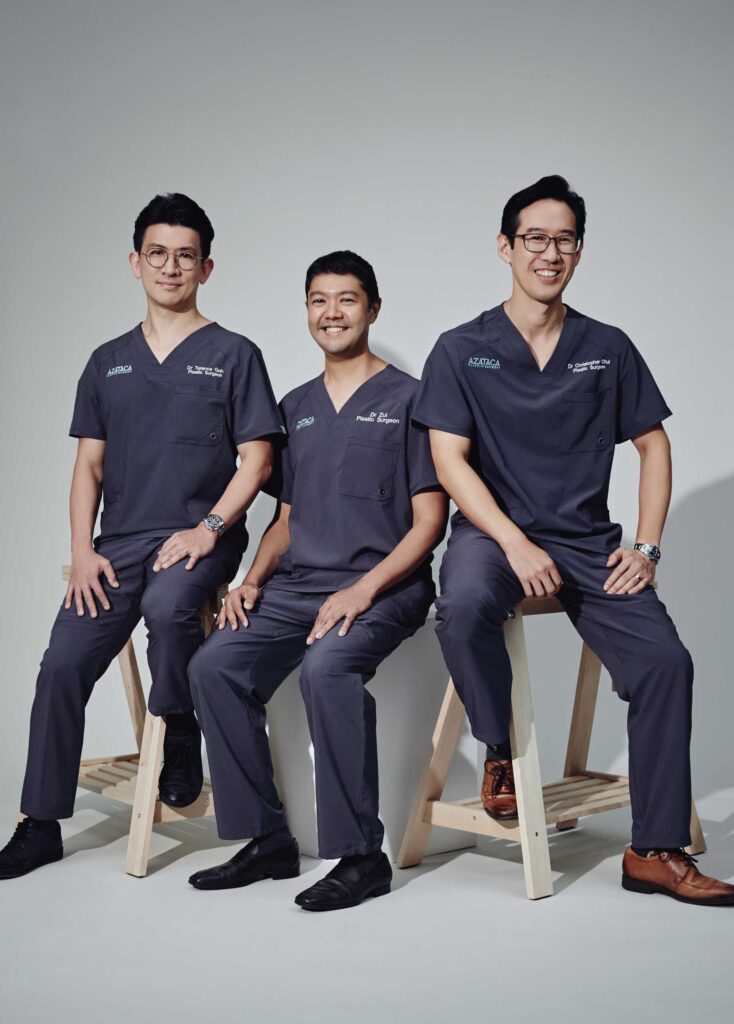
If you are considering the treatment with our experienced surgeons, you may book a consultation to discuss suitability, options, and the treatment process based on your medical history and goals.
FAQ
Frequently Asked Questions
When will you see results and how long will they last?
The transplant hairs will fall out 2-3 weeks after the transplantation. This is a normal process so do not be alarmed. They will grow back. The new hair will start to grow out about 3-4 months later and once it is engrafted, it will continue to grow for a lifetime. You shoul see 90% of the results at 10-12 months.
What is a Follicular unit transplantation (FUT)?
A thin strip of your hair-bearing scalp, usually from the back of your head, is removed and the area stitched up finely. Smaller fragments, called grafts, are created from this piece, which is then transplanted onto the head where needed. The incision is planned so that the scar can be hidden within the hairline.
What is a Follicular unit extraction (FUE)?
With FUE, the hair grafts are moved one at a time, rather than created from a strip of skin. Hence there is no linear scar and the procedure is less painful with a faster recovery. Individual follicles are removed, then grafted onto other parts of the scalp where needed. For FUE, we will need to shave the donor area before extracting the hair, so you will need to plan around the procedure. A “no-shave” FUE is an option but this is more time-consuming and demanding.
🩺 A full evaluation with an MOH-accredited doctor is required to determine suitability for the procedure.
*Disclaimer: Results vary according to individual.
GET IN TOUCH
Book Your Consultation