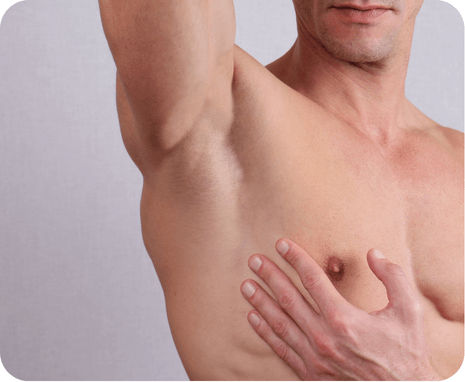
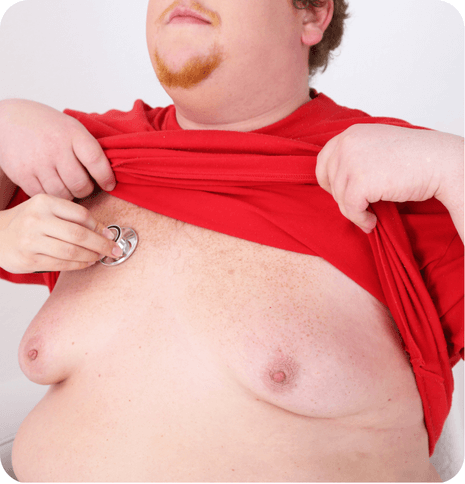
Gynaecomastia is the enlargement of the male breast. It may be caused by certain medications or diseases, but the most common cause is a hormone imbalance that can occur in newborns, adolescents, and the elderly. In many patients, no clear cause is identified.
Some cases resolve spontaneously, but long-standing gynaecomastia is unlikely to improve on its own and may benefit from surgical reduction. Men may feel embarrassed about the appearance of their chest and avoid tight clothing. Some experience tenderness or puffiness around the nipple.
Gynaecomastia may result from excess breast gland, excess fat, or both. It may be classified as mild, moderate, or severe, and may or may not include excess skin.
Causes of Gynaecomastia
Gynaecomastia can occur for several reasons. Common causes include:
Physiological Hormone Imbalance
Occurs naturally in newborns, adolescents, and the elderly.
Due to an imbalance between estrogen and testosterone.
Often resolves within two years.
Medical Conditions
Liver diseases
Testicular tumors
Pituitary disorders
Medications
Cimetidine
Digoxin
Verapamil
Idiopathic Causes
In many situations, no identifiable cause is found.
PROCEDURES
Procedural Approaches
Treatment options vary depending on whether the excess tissue is glandular, fatty, or a combination:
Liposuction: Used to remove excess fat.
Gland Excision: The breast gland is firmer and generally cannot be removed with liposuction. It is removed through open excision, mini excision, or microdebriders.
Skin Management: If there is no excess skin, it often recoils after tissue removal. With skin excess, options include allowing natural recoil, excising skin in a second surgery, or removing excess skin in the same procedure using concealed or anchor-shaped incisions.
Gynaecomastia surgery is usually performed under general anesthesia. A drain may be inserted to remove fluid and is typically removed the next day.
INDICATIONS
Who May Consider Breast Lift
Gynaecomastia may resolve on its own, especially when it occurs during certain life stages. However, gynaecomastia that persists for more than two years is unlikely to resolve, and surgical reduction may be beneficial.
Gynaecomastia may be glandular, fatty (pseudo-gynaecomastia), or a combination. It may also be graded by size:
A pressure garment should be worn for a few months.
Exercise should be avoided for six weeks.
Final results are usually seen in about three months.
HOW TO START
Arrange a Consultation
If you are considering the treatment with our experienced surgeons, you may book a consultation to discuss suitability, options, and the treatment process based on your medical history and goals.
Your doctor will take a history and perform a physical examination. Imaging such as mammograms or ultrasounds may be used to rule out pathology. Blood tests such as hormone profiles may also be indicated.
🩺 A full evaluation with an MOH-accredited doctor is required to determine suitability for the procedure.
*Disclaimer: Results vary according to individual.