SKIN LESION REMOVAL
ABOUT
Skin Lesion Removal
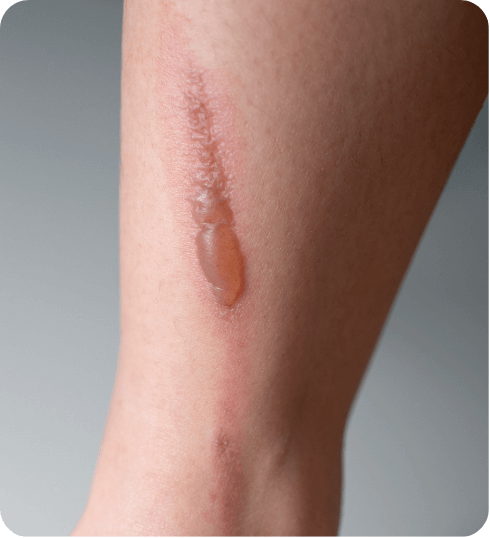
A skin lesion is an area of skin that is different from the surrounding skin. This can be a lump or a flat area of skin that is not normal. There are benign skin lesions, such as moles, sebaceous cysts, lipomas and dermoid cysts which are non-cancerous.
There are also malignant skin lesions which are cancerous and they include squamous cell carcinoma, basal cell carcinoma and melanomas.A skin lesion is an area of skin that is different from the surrounding skin. This can be a lump or a flat area of skin that is not normal.
There are benign skin lesions, such as moles, sebaceous cysts, lipomas and dermoid cysts which are non-cancerous. There are also malignant skin lesions which are cancerous and they include squamous cell carcinoma, basal cell carcinoma and melanomas.
PROCEDURES
What is the Procedure
Anaesthesia
Most skin lesions are removed under local anaesthesia in our clinic facility which is well equipped for safety and privacy.
An injection is given to numb the area before the lesion is excised. Occasionally, patients may request for intravenous sedation or general anaesthesia.
Removal of skin lesion
A benign or small lesion may be removed with excision and immediate skin closure with sutures. Occasionally, when the lesion is cancerous, an extra rim of tissue is excised so as to prevent recurrence.
Depending on the size of the defect after removal, reconstruction of the skin may be required.
Reconstruction.
In skin lesions that are particularly large or cancerous, removal is likely to cause disfigurement and reconstruction of a local flap can be done immediately to restore normal anatomy. Healthy, adjacent tissue is rearranged over the wound to provide a tension-free wound closure.
Several variations of local flaps can be employed to reconstruct a specific area of the face or body. In certain situations, a skin graft can also be taken from a remote site, such as the groin or back of the ear to reconstruct the defect.
INDICATIONS
Do you need to remove the Skin Lesion?
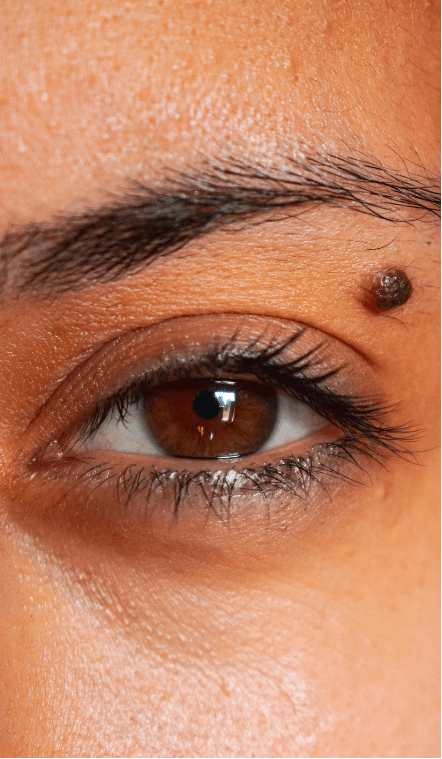
Our surgeons may recommend removing a skin lesion if there is any concern that it may be cancerous or could become cancerous.
Benign (non-cancerous) lesions can sometimes look similar to skin cancer — laboratory examination after removal is the only way to confirm the diagnosis.
- Benign lesions that are stable can be safely observed if there are no worrisome features.
- Removal may be considered if the lesion:
- Causes irritation or catches on clothing
- Affects appearance or causes discomfort
- Warning signs that may suggest a suspicious lesion include:
- A – Asymmetry
- B – Irregular borders
- C – Colour changes
- D – Diameter larger than 6 mm
🩺 A professional evaluation is essential to determine whether removal is necessary for medical or cosmetic reasons.
SAFETY
Risks & Considerations
It is important to understand that most skin procedures may leave a scar.
Our surgeons aim to minimise and conceal scars as much as possible while ensuring proper healing and safety.
- Scars are planned along natural skin lines or folds to reduce visibility.
- The appearance of a scar depends on lesion location and individual healing.
- Extra care before and after surgery supports optimal wound healing.
- Plastic surgeons are often consulted for lesions on the face or near delicate areas (eyes, lips, nostrils).
- For malignant or suspected malignant lesions, a wider margin of normal skin may need to be removed to prevent recurrence.
- In some cases, reconstructive surgery may be required to restore normal anatomy and preserve facial function.
🩺 Your surgeon will discuss scar placement and healing expectations during consultation.
AFTERCARE
Downtime & Recovery

Most skin lesion removal procedures are performed under local anaesthetic.
Mild discomfort and swelling are expected after the numbness wears off and can be managed with simple pain relief medication.
- Mild pain, swelling, or bruising may occur in the first few days and usually improves within a week.
- Painkillers may be taken as advised to relieve discomfort.
- Patients who undergo local anaesthetic can generally go home the same day.
- Depending on your occupation, consider taking 1–2 days off work for recovery.
- If the lesion is near the eye, arrange for someone to drive you home, as temporary swelling may affect vision.
🩺 Your surgeon will provide post-procedure care instructions to help ensure a smooth recovery.
HOW TO START
Arrange a Consultation
If you are considering the treatment with our experienced surgeons, you may book a consultation to discuss suitability, options, and the treatment process based on your medical history and goals.
FAQ
Frequently Asked Questions
How can I optimise the scars after removal of the Skin Lesion?
Your plastic surgeon will make an assessment of the skin lesion and design a stealth incision so that the scar can be concealed along the natural skin creases or shadows of the face. Meticulous skin closure technique ensuring tension-free apposition of the skin is critical in ensuring a good post-operative result. Our surgeons use very fine sutures to ensure that scarring is minimal and that your wound healing is optimised.
After the surgery, a strict regime of silicone scar cream and sunblock is important to ensure that the scar remains flat and does not become pigmented (darker than normal skin). In certain individuals, steroid injections or laser scar therapy may be needed to improve the appearance of the scar.
🩺 A full evaluation with an MOH-accredited doctor is required to determine suitability for the procedure.
*Disclaimer: Results vary according to individual.
GET IN TOUCH
Book Your Consultation