LOWER LIMB SALVAGE
ABOUT
Lower Limb Salvage or Reconstruction
Lower limb reconstruction focuses on preserving the limb and maintaining function. Plastic surgeons work closely with general and orthopaedic surgeons for conditions that may threaten limb loss. Common causes include trauma, cancer, and severe infections such as necrotising fasciitis or diabetic foot infections.
PROCEDURES
What Can Be Reconstructed
The lower limb is broadly divided into above-knee and below-knee regions, with below-knee further divided into upper, middle, and lower thirds. Reconstruction options depend on the location and severity of tissue loss.
- Above Knee: Often treated with direct closure or local/pedicle flaps due to abundant soft tissue.
- Upper Third of Leg: Pedicle flaps from the thigh or calf may be used. Common reasons include post‑knee reconstruction infections and open injuries.
- Middle Third of Leg: Often related to open tibial fractures. Adjacent muscle flaps may be used; severe cases may require free tissue transfer.
- Lower Third of Leg: Limited soft tissue makes reconstruction challenging. Free tissue transfer is commonly required, though selected cases may use pedicled flaps.
- Diabetic Foot Conditions: Early medical attention is important for limb salvage. Improved understanding of flap physiology has expanded reconstructive options for diabetic foot infections.
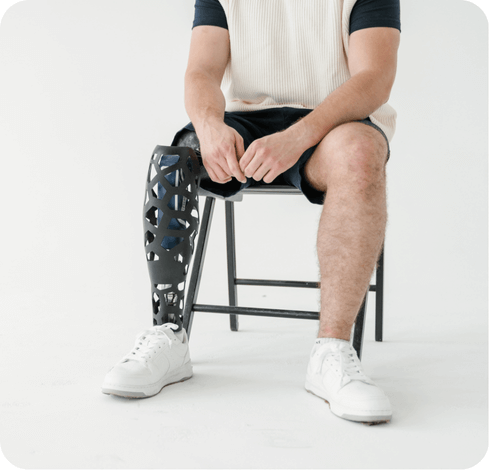
Reconstruction Options
1. Primary Closure
Direct closure of the wound when there is sufficient healthy tissue.
2. Skin Grafting
Transfer of a thin layer of skin from a donor site to cover surface defects.
3. Vacuum-Assisted Devices
Negative-pressure therapy used to optimise the wound bed and support delayed closure.
4. Local Flaps
Repositioning of adjacent tissue to cover exposed structures.
5. Free Tissue Transfer
Tissue from a distant site (e.g., thigh or forearm) is transplanted for complex defects.
The suitable option depends on the severity and type of injury. Early assessment with your plastic surgeon is recommended.
INDICATIONS
Who Is It For?
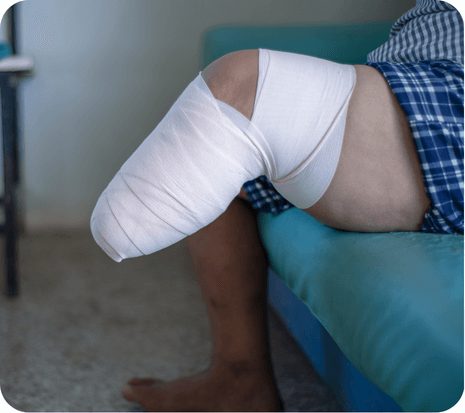
- Patients with open fractures, degloving injuries, or traumatic soft‑tissue loss.
- Patients requiring reconstruction after removal of bone or soft‑tissue cancers.
- Patients with severe infections, including diabetic foot infections.
SAFETY
Risks & Considerations
- Infections at the injured or donor site
- Bleeding, bruising, swelling, or hematoma
- Partial or complete flap loss
- Possible need for revision or secondary flap procedures
- Scarring
- Loss of function depending on injury severity
- Risks related to anaesthesia
- Complications from prolonged bed rest
AFTERCARE
Downtime & Recovery
- After surgery, patients are usually monitored in a high‑dependency ward. Feeding resumes after 24 hours once the flap is stable. Drains are removed after a few days.
- Early mobilisation is encouraged under physiotherapy guidance, often with wheelchair use or crutches.
- Once the flap is stable the patients can be discharged and followed up in the outpatient clinic.
- Recovery may take weeks to months depending on the extent of injury and reconstruction.
HOW TO START
Arrange a Consultation
If you are considering the treatment with our experienced surgeons, you may book a consultation to discuss suitability, options, and the treatment process based on your medical history and goals.
FAQ
Frequently Asked Questions
What preparation is required before surgery?
Preparation includes imaging studies to assess the injury and blood supply, planning of reconstructive options, and anaesthesia review.
Which reconstructive option is suitable for me?
This depends on the severity of injury and extent of tissue loss. Options range from simple closure to free tissue transfer.
Is liposuction used in reconstruction?
Liposuction is not part of lower limb reconstruction but its general risks are listed for reference: bruising, swelling, numbness, asymmetry, scars, and rare but serious complications such as embolism or fluid shift.
🩺 A full evaluation with an MOH-accredited doctor is required to determine suitability for the procedure.
*Disclaimer: Results vary according to individual.
GET IN TOUCH
Book Your Consultation